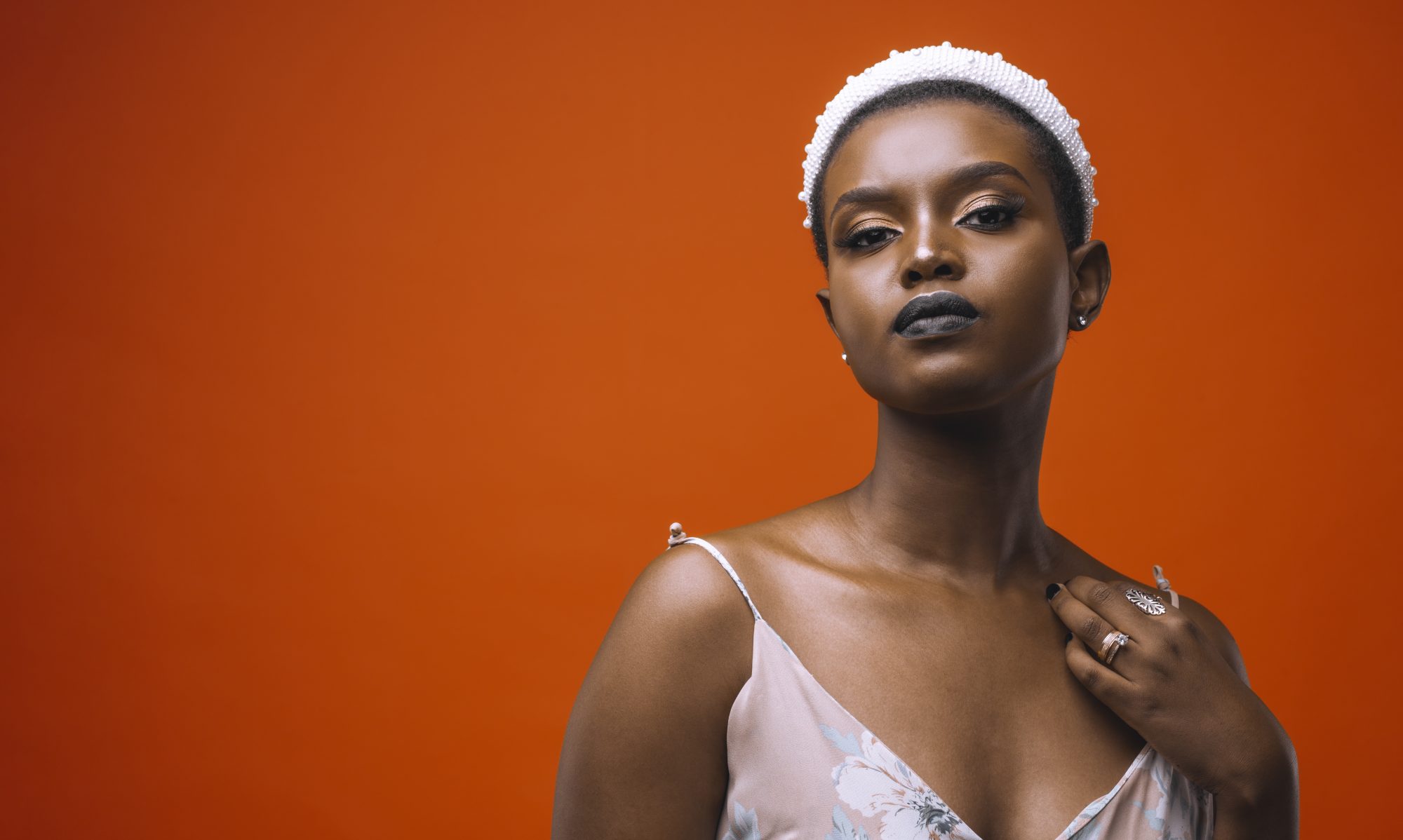
Meet Robin Malinga, aUgandanArtist.

A lot of what this artist expresses as art can easily be speculated from meeting him and exchanging a few words, the least likely scenario being small talk for small talk’s sake. He’s the type that talks about what he sees, calling-em- as-he-sees-em, and outright asking why you wear your hair the way you do, where his rarely insincere curiosity is peaked. The fruits of this conduct are rarely prosaic, something that can be most exciting in a person, and exponentially more in an artist. He would find thrilling adventure in the more conventional routines of life I reckon.
There is a theme of inspiring excitement drawn from this lack of conventional, run-of-the-mill attitude, that would have you wanting to be involved in something and anything suggested by him. It could be typically as big as changing the world, yet have you simultaneously feeling like it’s the most chill and fun way of living life; something atypically rare in most artists you’d meet today. He is a dreamer, and the practical kind of dreamer to be sure and the necessary kind in a world of mundane motions of living.
He expresses his art through animation and is as well a bassist known by many in some of the musical circles in Kampala, currently playing with the band Route 316 that you can find out more about on social media platforms such as Facebook.
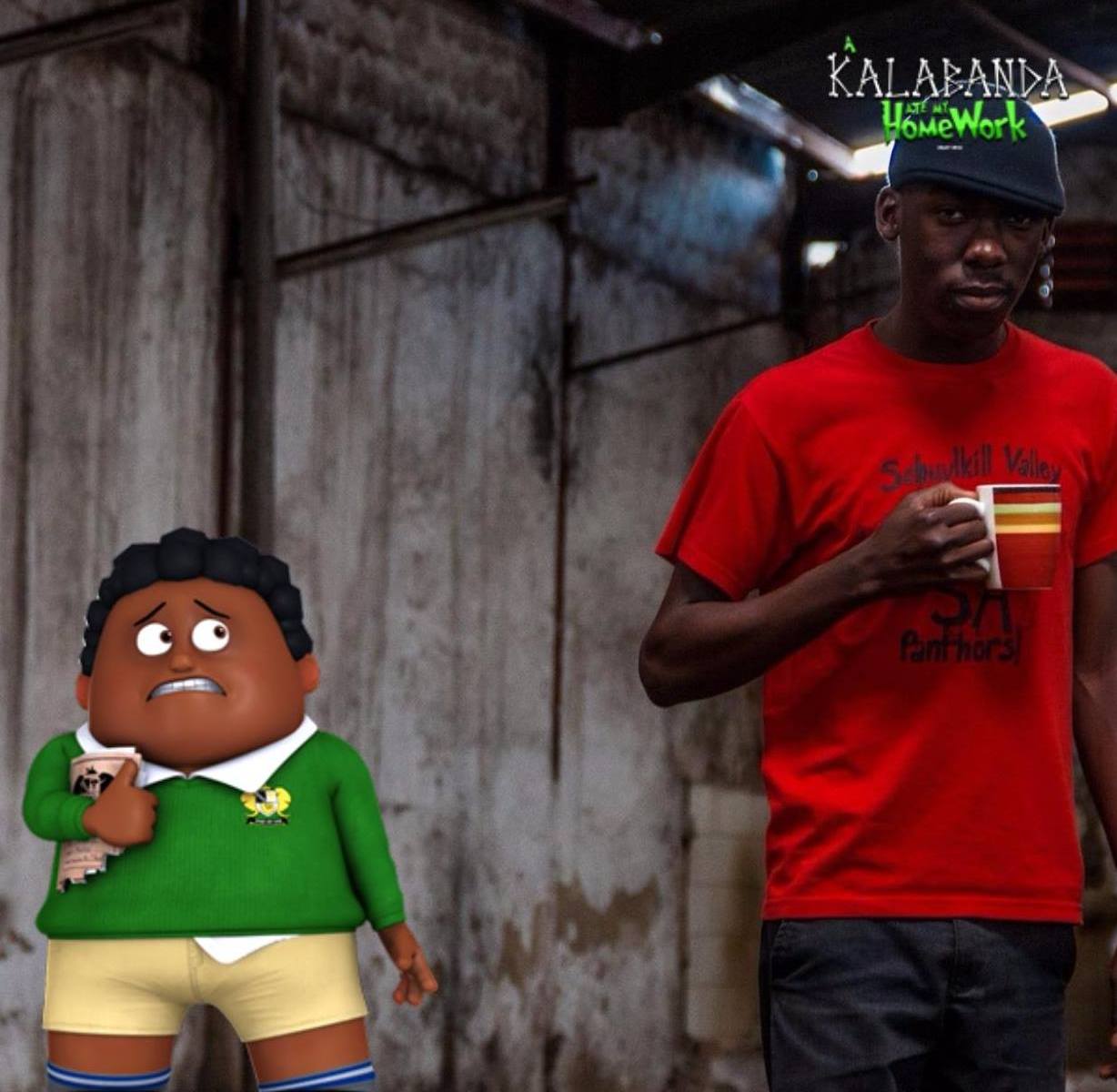
Irrevocable evidence of what may seem to you a presupposition in this instance is the recently released “A Kalabanda Ate my Homework” by the team of Creatures Animation Studio that Robin works with. It is a short animation that centers around the very relatable and ambivalently alien struggles of a one Tendo. He must face the wrath of Mr. Oketch for failing to deliver on his part his ingrained duty to regurgitation of information in the embodiment that is homework, under the auspices of a good education, as well as deal with the dubious contributions of double-faced neighbor Kibe. This six and a half minute animation will have you entertained, educated and reminded of the struggles of education in Uganda, that you most likely went through and have you super proud that something like this is labelled Ugandan.
Here are some questions that more specifically introduce the unique mind of 23 year old Ugandan Artist Robin Malinga, to you. My hope is that in understanding this artist’s mind if you are encouraged to step out and do what he has done, you have a bearing but over archingly, that Ugandan art is recognized and supported by Ugandans, for Uganda.
- So animation huh? Why?
First and foremost, I am a storyteller. Animation for me is simply a platform to tell my stories. It just happens to be the platform that I am using at this moment in time. True, I am into animation more than I am live action; but live action is something that I am definitely going to look into in the future.
To really answer the question – Animation because my brother Raymond studied film and animation. Before he left to study, we were heavily inspired by anime. This was because unlike most Western animations, anime could tell in-depth stories with values that resonated with adults as well as children. They would bring what would have otherwise been left for a live action series in the West to their animated shows.
- Is it as exciting as you imagined it would be?
It is exciting. But not in the way I thought it would be. Excitement turned into aspirations, goals & objectives.
When you start a company (legally), your excitement quickly transforms into responsibility. It’s no longer just animation or storytelling. Now it’s a business. You quickly realise you need to make money and be profitable in order to achieve your big dreams. That shakes your aspirations. You start to see things in a different way. Now the story that you thought you’d tell since your childhood doesn’t make business sense. No-one would watch it. Only you. That’s no good. It’s not only about you anymore, they’re countless numbers of potential customers for your product out there. All you have to do is reach them. Reach them through your art. In this case, through the animation.
Excitement was a major driving factor for me before the Creatures company started – excited to write, excited to see characters moving. But now, the sense of aspiration is what drives me. Where do we need to be tomorrow?
Don’t get me wrong, it’s pretty exciting at every stage. Seeing a character that was just a name on a paper be conceptualized by the artist, modelled into a 3D character, starting to move and talk, and then appreciated by the audience. With all this excitement, you can’t lose sight of the important things. The biggest question being, “Are we making money?” If not, then this is just a hobby. Excitement won’t feed the people on your team. Haha.
- What inspires you to go and get through any difficulties that you have found to exist? What are some of those difficulties?
One of the biggest difficulties I believe we faced was when we had announce “A Kalabanda Ate My Homework” and everywhere we went, a bunch of people had things to say. “Ugandans are conservative. They will never accept something with a word like Kalabanda.”, “You want to put in English? Ugandans will never accept that.”, “Change your title.”, “Why don’t you do other stories like Kintu.” Etc etc. Everyone is an expert in your art suddenly. They all know and you don’t. Wrong! When we realized that this was normal and not just unique to us, we stood our ground. We learnt to adapt. I mean how much pressure do Hollywood artists go through when they announce a movie like “Suicide Squad”. All the fans are telling them what to do, what the movie should be like, who should be cast. People talk. You just have to learn how to adapt. We truly believed that what we had was good and no amount of words were going to change that. These people were commenting on something that they had not only not seen yet, but also had no idea what the heck it was about at the time.
Related to that is the fact that nobody believed in what we were doing. At a certain point during production of ‘AKAMH’, we tried to look for potential funders/sponsors. All of them seemed interested but none willing to take the risk. Over time, we came to realize that this was only natural. We were asking people to invest money in an unknown company with no track record in a product that they hadn’t seen. Companies try as much as possible to minimalize risk. Investing in us seemed like a huge risk. We pushed on and funded the film ourselves, getting money from animation services here and there. In the end, we invested in ourselves since we were the ones who knew the value of our product.
- Would you consider animation an art? Why? What element within it do you think qualifies it as an art the most?
I’ll quote my brother Raymond here. “Animation is the ultimate art.” It brings together almost all kinds of art. Drawing, painting, voice acting, music, film, lighting, photography are all used in one way or another to produce a 3D animated film.
- What do you hope to achieve with what you are doing, for yourself and as well for those that encounter your art?
My desire in life is to spread happiness. Through my art I hope to make people happy, make them laugh and smile while inspiring them through my stories to be better people to each other. If I’m able to inspire even just one person to become better I this life, I’d be pleased.
- If you could change one thing about art in Uganda, either how it is received, expressed or any thing other than that, what would it be and why? On the other hand, what wouldn’t you change and in fact encourage concerning art in Uganda?
The one thing I’d change about art in Uganda is the professionalism. There is a lack of professionalism generally across all kinds of art in Uganda. Artists need to learn to value themselves more. In Uganda, an artist can do a job for a client for free simply to get exposure, give out their products for free. Exposure is necessary, but we can’t live on exposure forever. Artists need to earn from their different crafts. They need to take this seriously. You can’t expect to be on the same level in terms of earnings/skill as a big artist – say Beyonce without putting in the work. Most accomplished artists are working day and night to remain relevant. They arrive on time for meetings, they interact with their fans, they do a lot of research into their businesses. I believe Ugandan artists need to realise that if their art is their profession, then they best respect it. Once you respect yourself, the public will respect you.
I wouldn’t change the desire to become artists in Uganda. Everyday I see a new amazing artist in Uganda coming up. We are on the rise. Artists are taking matters into their own hands instead of waiting for the ideal situation. There’s a fire and so much talent that it’s overwhelming.
- What do you do exactly at Creatures Studio and how did your involvement within it begin?
I am the COO (Chief Operating Officer) of Creatures. But to put it simply, think of me as number 2. I generally run the business affairs of Creatures. At the moment, I also handle the marketing and accounting. I am also a screen writer and once in a while I work on sound & music. This is because our team is still small and we all have to multitask.
My involvement at Creatures: it was always part of the plan to start the studio ever since Raymond went to study animation. So once he returned, we just started.
- How does what you studied at University tie in with you are doing now? Do you find a relevance to studying courses that aren’t necessarily in line with one’s forms of artistic expression? Is there any advantage to that or it is generally disadvantageous?
I originally desired to study film & animation but due to a number of factors, that couldn’t happen. I ended up studying Business Administration at MUBS. For the first few weeks I dreaded my course but when I realized that this was the reality and it wasn’t going to change, I decided to make the best of it. Since the studio was going to be starting in a few years, we would need someone who was going to manage business affairs anyway. Studying business didn’t change the fact that I could write, it just meant that my role in the studio would change slightly from what I previously thought it would be. Everyday I was in class, I was interpreting what the lecturer said in a completely different way from everyone else in the classroom. I was trying to understand how all these things could be applied to Creatures. It actually made the course easier. What I studied has been useful. I’ve been able to fill out roles that we would have otherwise had to hire out or would have performed poorly. I majored in Marketing because I believed it would be useful, and marketing has been emphasized in our work pipeline.
I say, if your course isn’t necessarily in line with your art, make the best of it. It could inspire you to write a song, you might be your own lawyer, who knows. True education gives an added edge but that can’t be your reason for giving up. Knowledge is power. That knowledge you think is useless, will turn out to be super useful.
9.What would you say to someone wanting to be a part of animation in Uganda and just starting out?
Not all of us are talented artists, not all of us know how o tell stories but you can find your place in the industry. Animation encompasses so many forms of art. You may find that you could join the animation industry through voice acting, or as a really great Marketing Manager for film. Go for it but be wise, research and learn from others. You can’t do it alone.
- Lastly, are there any Ugandans you admire or look up to with regards to what is happening with animation in Uganda?
As someone who works in an animation studio and doesn’t actually animate, the Ugandans I admire with regards to what is happening in Uganda are my teammates. Many of them have grown so much in their art in such a short time because of the drive to be better.
Are you an animator, interested in animation, or some of the stuff Robin Malinga has talked about? Please comment and spark discussion!
We are aUgandanArtist.
 augandanartist.com
“Excitement turned into aspirations, goals & objectives.”
I wanted to laugh and cry at the same time when I read this line.
So much truth in Robin’s words.
Thanks for sharing! 🙂
LikeLike