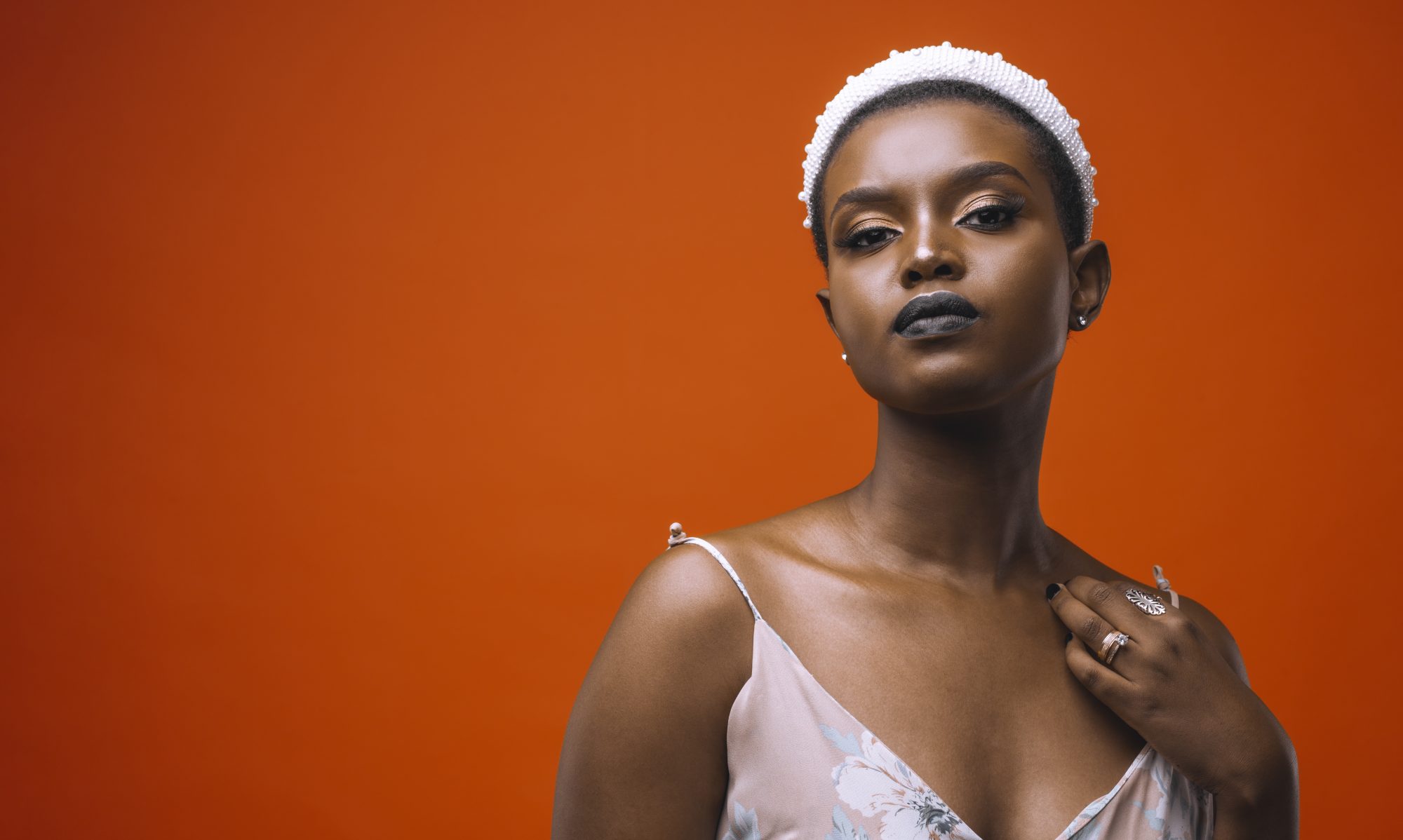
The formula for being wanted- what is it?
If I asked you what you think this formula entails, or what you think is common about people that are easily liked, what would you say?
Maybe you would say that they are easy to get along with, or that they are the kind of people that are fun, engaging and relatable. Maybe you would explain that the formula involves some sort of hacking of the biology and/or psychology that ensures we need to be wanted or liked in the first place; and whatever debunked Darwinian theory that used to apply. ( I don’t know the new theories)
You would probably explain that it is as simple as figuring out how to fit into a social group you need to rely on for whatever food, shelter and security stands for to you today, wherever Maslow hierarchy of needs aligns with yourself and your needs. If you actually needed food, shelter and security, there’s no principle in Rosseau’s idea of the social contract where our governments need to like us to afford these things that comes to mind, so, that might need another sort of discussion related to Kelsen and his theories of revolutionary legality probably- and I wish you all the best, because I really don’t know how to metaphorize that in the least bit right now. However, generally though, I think Mean Girls (the one with Lindsay Lohan) gives some good lessons and works generally well as a contemporary starting point for some direction on how to think about this question; and no, I can’t relate to any parallels in the Renee Rapp one because it’s from a different time and I am a millennial from this time. Yes. The denial is good for my overall mental well-being.
Here’s something interesting though.
There was once a time- and a fairly recent one too- where I had a rather clear and resounding opinion about this question; and one that remains the same in the timelines before and after I watched the Lindsay Lohan Mean Girls.
I would have told you that this formula entails literally being yourself; and I would add on that what is common about people that are easily liked is that they are unapologetically themselves and that’s always something endearing- maybe because it’s supposedly hard to do and, additionally, also rare, and therefore was literally awesome. After I said that I’d expect that you would give me an A+ in this hypothetical exam and congratulatorily shake my hand as the photographers snapped the moment to sarcastically frame on a massive billboard. Insert the smiling clown emoji somewhere, because it really isn’t that simple and never was even when I thought it would be.
Now, like many millennials, I simply am sat here wondering why everything I do is condemnably cringe, and I assuredly know I am not alone in this feeling. But let’s linger a moment, because the real achievement here for you and me, is in asking why being ourselves feels like something we need to figure out in the first place.
For artists, the question of being authentic versus being liked feels like a battle we’re asked to fight every day, an unwelcome formula we wrestle with. On one side, there’s the allure of approval, and on the other, the quiet, but potent strength of being who we truly are. It is rough and tough out here ba dia.
In a world constantly nudging us to fit into boxes, authenticity often feels risky. For you making the type of art that won’t be bought or make money, it might literally be risky because, how else are you going to meet your needs? – and yes, these needs are the literal food, security ones of Maslow’s hierarchy.
Especially for artists, there’s this internal pressure to present a version of ourselves that’s palatable, universally appealing. Most often than not, that pressure is more internal than external because why do you and I imagine there’s an unspoken rule that says,
“If you want to make it, be what others want to see.”
But yo, this is serious because the strength of this idea is no small thing to variate.
Art is so closely tied to vulnerability, and we know this. Noah Gundersen basically talks about it as Selfish Art. The reality though is that the line between our personal and public selves blurs all too easily, and once you cross that line, it’s hard to come back. You become “the persona” instead of the person. It’s such an intense issue because applause feels good, and recognition validates you—and that’s a necessary thing as well for us. (Yes, our dear Maslow arranges this as well in his hierarchy).
So, what’s more necessary than the other and how do you decide?
I guess you do it the same way you make your decisions. (Insert how you make your decisions here).
This is what I decided though, proudly brought to you by- yes you guessed it- Maslow and his dear hierarchy.
I decided that while I need the applause, affirmation and validation, yet, authenticity is still more than a moment. I decided that being myself in my art, and in my life, is a constant state of becoming. I am always peeling back layers, finding new edges, seeing flaws and working with them. I decided that I am, after all, a living canvas. I realised that the only magic is that art can only truly resonate when it’s infused with the unfiltered truth of you, and that’s the paradox that has forced me to need to write this post. I have decided that to reach people deeply, to be memorable, you must be vulnerable, even if it means being a bit less cool. You might need to be condemnably cringe indeed.
The artists I appreciate and remember aren’t always those who painted within the lines of mass approval. They’re usually the ones who dared to step out, even if it meant facing rejection or being misunderstood, and more often than not they were. Think about musicians who reveal their rawest experiences in lyrics or painters whose works don’t conform to what’s comfortable. They are loved not because they’ve perfected a likable image, but because they’ve dared to say, “This is me.” In sight of them through their art, my eyes and heart have shone with the inspiration that causes me to chase this thing saying, “I want to do this too for others!” I want others to feel this feeling because I chose to make art vulnerably.
But at what cost? And bambi, why am I seemingly alone in my jazz? (Yet I know we are many)
Yeah, yeah, yeah. We know thatIf you focus solely on being wanted or liked, it’s easy to lose yourself and what not. Approval becomes an ever-moving target. You adapt to trends, adjust to feedback, maybe even mimic what’s working for others. You could become successful in the eyes of others, but would you still recognize the artist in the mirror blab bla bla? Would that version of yourself still fulfil you etc, etc? Because what is sincerely wrong with a stadium singing my lyrics back to me? And why is there this juxtaposing interdependence between audience, numbers and yes, you guessed it- popularity, that must be impressed on me? Why can’t I be the Taylor Swift of Uganda having insane world tours and deeply vulnerable and personal art?
I am not saying you can’t be.
I blame capitalism for the conundrum. You might blame something else, but whatever it is, this is our shared reality.
In my very few years of life and living, I have seen trends change, opinions shift, audiences move on. Once upon time wearing a literal dress over jeans was cool and now mum jeans are cool (at least I think so), let alone those demon possessed people trying to bring back low-rise jeans; and if all that’s left is a diluted version of yourself, when I choose to express myself when I wear my clothes, then what’s the point of wearing clothes sincerely?! (Ashely Tisdale actually looked really cool at those Teens Choice awards, and time changing has nothing to do with it.)
What I mean is, even for the amazing Taylor Swift, there shall be a time where there are no undulating masses of crowds singing her lyrics back to her, whether at the point she is in the bathroom or when the world eventually decides pop rock is cool again. What shall be the satisfaction then? We wish her well in that endeavor.
Naye for me, in the 9 years I have navigated making music commercially and professionally, I have chased many things. Not because they aren’t worth chasing, but if I turned to art to fill voids and missing places in myself in the first place, please, give me anything but the emptiness! For me, that’s my why. I have learned that betraying that “why” leaves you feeling like something essential is missing in your artistic journey.
In contrast, each time I have grounded my art in who I genuinely am, it has become a foundation that can withstand the storm of the myriads of opinions. It’s a space I can return to when everything else feels uncertain. And yes, it’s a harder path, but the reward is that your work will outlast the moment—it becomes timeless. That’s very important in answering my “Why”.
Sometimes I am shocked by this everlasting struggle of peer susceptibility well into adulthood and why it begins towards 30. I sincerely imagined all we needed to get through why high school but no. Lo and behold, being in your 30s feels like being in an American high school somehow- the point being, shouldn’t I have found enough information by now, to be secure in myself and in my art’s purpose?
Why do I look around and second, third and fourth guess my decisions and belief?
Anyone out there feel like that too?
In case, you didn’t get the memo, I feel like that a bunch.
For myself, I’ve grappled with this idea repeatedly. I’ve known the joy of applause (ka little applause small small), the satisfaction of seeing my work resonate with others (I am thankful forever for the messages and DMs), but there’s a silent emptiness in creating for approval alone.
I’ve found that the art which stays with me the longest, the pieces that feel most “mine,” are the ones I didn’t create for anyone but myself. I have always believed that art is for the artist before it is for the audience. They’re the songs that didn’t try to fit a trend, the words that might have been “too much” or “not enough” for someone else but were just right for me. Little Grown Up Child was for me. Love and Light was for me. I released them after and when they were still for me. There’s such a comfort in releasing them to the world for everyone else in that and it’s not just me. If you speak with many artists, you’ll find a similar story.
The most powerful, moving pieces come from a place of self-acceptance. The world might label it “too raw” or “too unconventional,” of that ki word “cringe”- but that’s precisely the beauty of it in my opinion.
When you’re unapologetically yourself, you give others permission to be themselves too.
You show them that there’s nothing wrong with it. These are the kinds of artists that raised me, and I just want to be that same person for that 12-year-old feeling “themselves”, and to be there if I can to remind them that they can be exactly that, and that the world need exactly them. Your art becomes a mirror, allowing others to see parts of themselves they might otherwise hide, and this – this is my passion.
But in the meantime, that disparity between yourself and the others needs reconciliation in your mind. So, what do you do with that? Your decision to become an artist has resulted in the need to earn through your art. However, the stadiums aren’t filing up, the Spotify streams don’t attract endorsements, and the social media following doesn’t encourage collaboration and partnership. What then?
I am constantly learning that authenticity requires a kind of resilience—a readiness to face criticism and embrace being different. At first, that criticism stings. People might not understand you, and their words can cut deep into not appreciating where you draw your art from deep inside you. But if you keep creating, keep showing up as you are, something remarkable happens. You build resilience. You learn to take feedback without letting it steer you off course. You come to understand that not everyone will see your vision, and that’s okay. Art isn’t meant for everyone. It’s meant for those who resonate with its truth because it is a message.
Quite honestly, it is some sort of this resilience that allows me to share what I share in this post. It is this resilience that has shaped the way I make a living. It’s not at all how I had hoped to satisfy the basic needs of life and living, but it keeps me going, and has in many surprising ways, been more of a door opening than otherwise. Until you build resilience to be true to your “why” you might not know exactly what you are capable of as an artist in achieving your dreams, purpose and fulfilment.
This resilience, born from vulnerability, eventually becomes you’re a source of greatest strength.
You start creating not from a place of wanting to be seen but from a place of wanting to see yourself fully, in all your layers, contradictions, and beauty. You’re not just creating art; you’re creating a reflection of yourself. And that self—no matter how imperfect—becomes a powerful force.
I believe that when you embrace that, you’ll find an audience that truly resonates with your work because they can sense the authenticity behind it, whether now, or in two hundred years like so many artists that have been appreciated after they were.
Why do you make your art? Remember your “why”. (Insert your “why” here)
Dig deep into that in deciding what matters, but no matter the answer to that, its sustainability shall come from whatever you comprise. When you are yourself, your art becomes unforgettable only because it has depth, emotion, and energy that’s impossible to fake.
That’s the beauty of it: true artistry is never about perfection. It’s about presence. It’s about letting people into the inner chambers of your experiences, your thoughts, and your feelings. When you allow yourself to be seen fully, you create a space where others feel safe to be themselves too.
Being wanted isn’t about approval or applause; it’s about connection.
And connection is born from authenticity. It’s born when you dare to step onto the stage, the canvas, or the page as yourself. Not the sanitized version, not the one moulded to fit others’ expectations—but the one that’s messy, passionate, and real. So, to the artist reading this, remember: the formula to being truly wanted isn’t about being someone else; it’s about being you.
You might not be for everyone, but you will be for someone, even if that person is just yourself.
 augandanartist.com
I enjoyed the trip
my why🥹
LikeLike