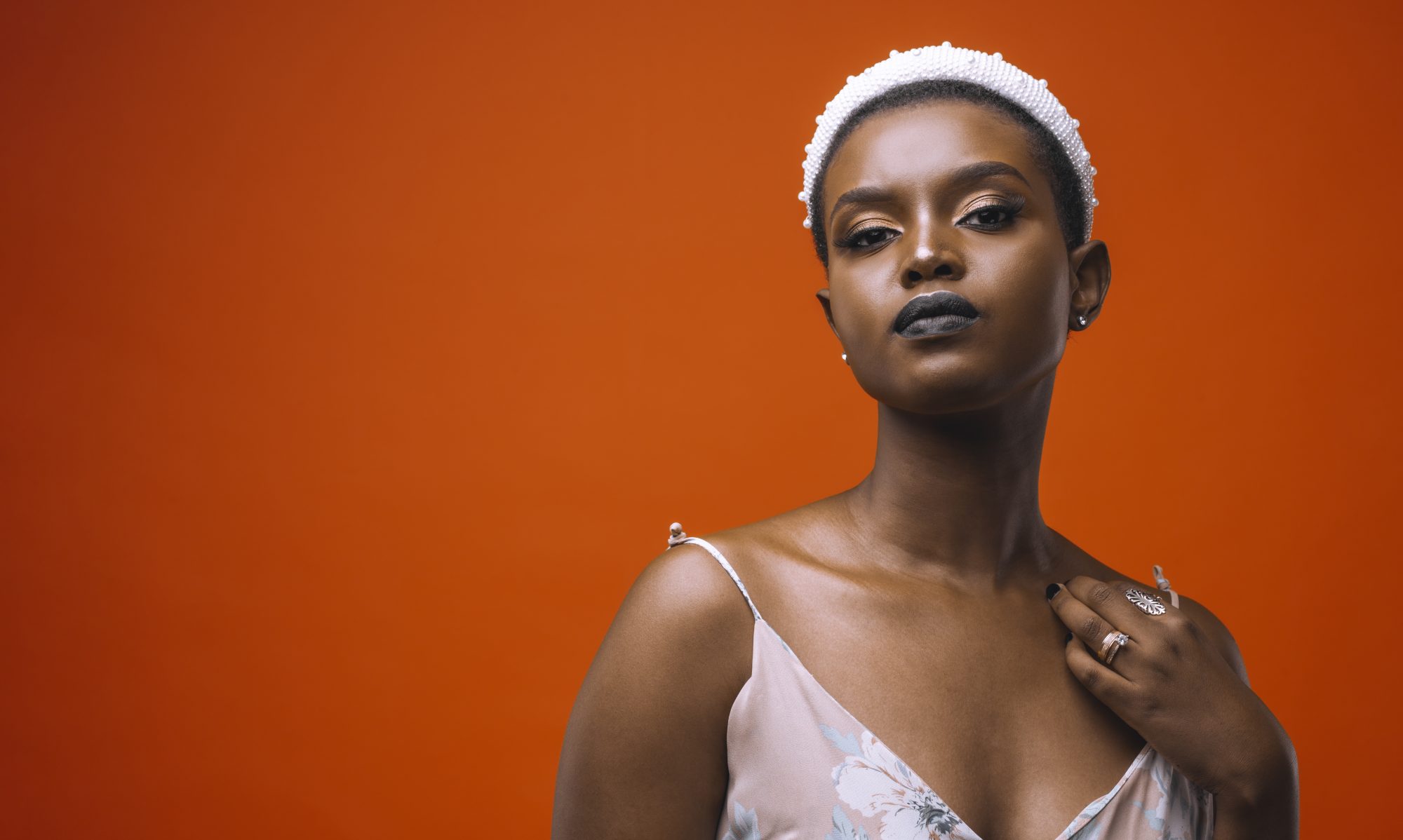
I knew my life was going to be steeped in creativity and artistry from a very early age; as early as five years old to be exact. I can never forget how moving it was to hear Celine Dion’s “My heart will go on.” Yes yes. I was a softie like that from then and please slap Tom Mayanja in the face if you hear him ever calling me Namyekozo because of it.
But yes, Celine Dion you guys; I wanted to do what she was doing to me in my insides to other people, and in the exact same way. I would tell my mother, “Mama, I’m going to write songs like that and make enough money to buy you a house” each time that music video would come on. I have always loved music and I know I was born with the ability to express myself through it.
In those initial years of life and as a child, your musical influences are those in your household. As a first born, it was just my parents. Being a pastor’s daughter, they were a ministering couple, and it was quickly enforced into my siblings and I, that we were a ministering family. So, all that integrity music from the late 90s and early 2000s is quite literally seared in my brain from all that exposure growing up.
Expectedly, in such a household, what we could watch or listen to was heavily overseen and curated. Here is how in this period, Disney and its musical cartoon numbers became the second artistic influence; especially to what I sung along to and how songs were written or structured. However, when primary school started it became apparent that outside Integrity music and Disney, there was a whole other world of musical influences to delve into.
Dad and mum didn’t follow me to school. So, during break time, the regular kids told me about Ziggy Dee and his ilk. This was fascinating to me; so incredibly fascinating that I learned all the lyrics to “Eno mic” from classmates without ever listening to it. The day it accidentally played on the house helps radio, I was screaming my lungs out in some sort of FOMO from all the repression. That was the last time she was allowed to play her radio in our hearing though. I remember the devotions we had where my mother sat me down and explained that what Ziggy Dee was singing about did not honor God. I told her “He is singing about a microphone, isn’t he?” Such harmless content, right? She just gave me that look (the one where if you say another word, your life might end), and I knew even if I didn’t understand I had to respect it. It was law.
Fast forward to the last two years of primary school. Ugandan TV was beginning to turn to Ugandan artists, promoting and supporting them (Remember events like Ekigunda kyo mwaka, of PAM Awards?) Through WBS, I was to be introduced to Ugandan music and artistry. I kid you not; any video that played enough after school or on the weekends, the lyrics are also etched into my brain because why do I still remember all the words to Red Banton’s “WBS Owange”. This is when I received some subconscious psychological permission to dream to be as cool as Nazizi or sing in English like Blu 3*. I didn’t know that women could do what those were doing! It was monumental for me at that age.
Sometimes, and especially before the news at 9pm, the whole family including my parents would gather to unwind at the TV. As this became more routine, before the existing overwhelment of advertisements had taken hold in our own media culture, during breaks, WBS would play Ugandan music videos. This was the first time I was introduced to Klear Kut, and to Navio: these cool kids introducing us to hip-hop which was anathema because hip-hop was the devil’s music that talked only about women’s bums and had a swear word every after another word.
Apart from the hymns and Integrity music we sang at home and in church and the occasional family sing alongs my dad especially chimed in with us on to “Bare Necessities” from Disney’s Jungle Book, the only other artists I have ever heard them proverbially “acknowledge” at the time were two. One was Elly Wamala, mostly because of my grandmother’s influence and how my parents nostalgically related to what he sung about. They would dance in this sitting room to “Boda Boda zituyamba” word for word and that was amazing to behold. My parents were normal people after all.
The other was Navio. My little brother would scatter from the sitting room, go and grab sunglasses to wear each time “Rakus” came on and where we were in the house, we as the children and my mother would scream just that Peter Miles intro to that song- “Navio! Peter Miles”. That meant that Navio was “okay”. Just like Elly Wamala was okay. My mum would tell me about his mother who was a medical doctor that went to all of his shows and that mind boggling because all that went through my mind was, “A parent can willingly and intentionally support their child’s choice to pursue an artistic career?!” I would look at the newspapers in the school library and in the entertainment section, they’d be something about Navio; the English rapping artist from Uganda a few years older than me. Ugandan music wasn’t just that Luganda I didn’t understand anymore. There were artists making music in a language I spoke primarily as well. That was dope and monumental as well.
Fast forward through my own journey of reconciling religion, faith and artistic expression, parental values, and the values I have chosen for myself, cultural identity crises and expression in music, globalisation and the lessons I have learned from travelling to other countries and sharing in their musical culture; Navio is still there in whatever story you’ll have time to listen to regarding my musical journey.
Fast forward one more time to 2023, where I am an artist as well (Mama is about to get that house, I promised) that goes by the moniker IZABELug, not experiencing people freak out when I sing in English because Klear Kut and Navio went before and exhausted all or at least most, regarding that possibility.
Then zoom in to me attending the show “20 years of Navio” at Sheraton Gardens on the 2nd of September and being backstage (haven’t I made it in life) with all the artists who were and are still part of Navio’s journey; artists that influenced me like he did; artists that I grew up watching on WBS; Ugandan artists that begun the story, line by line for me with an example of what it means or could like to be a Ugandan artist. And then watch Navio on stage perform those hits one by one with all the energy and fervour he always has, even now 20 years later. Waa.
Lastly, let it sink in so profoundly of how amazing and full circle this was for me and so many others. That show was nothing short of monumental ( a recurring theme if you haven’t noticed) and buy me lunch if you want to know why that is. I reckon though, after reading and learning a bit more about Navio, you shall more quickly come to understand, that success was quite frankly inevitable. The President himself attended that show as a matter of fact. (* cue in eternal and everlasting props*)
If you don’t know who Navio is, I don’t know why. But let me briefly introduce him to you just in case.
Navio: Uganda’s Hip-Hop Luminary
In the vibrant tapestry of Uganda’s music scene, one name shines particularly bright: Daniel Lubwama Kigozi, better known to his fans as Navio. Born on the 18th of October in 1983, Navio is more than just a rapper and record producer; he’s a musical trailblazer who has left an indelible mark on the East African hip-hop landscape.
The Genesis of Ugaflow
Navio’s journey in music began as part of the groundbreaking hip-hop ensemble, Klear Kut. This group of talented artists not only revolutionized Uganda’s music scene but also coined the term “Ugaflow” to describe the burgeoning hip-hop culture in the country. Their debut album, “Mind, Body, and Soul” (2000), catapulted them to fame, featuring unforgettable hits like “All I Wanna Know” and “Let’s Get It On.”
Navio’s Solo Soar
While Klear Kut made waves collectively, Navio ventured into a solo career that skyrocketed him to stardom. Hits like “Ngalo,” “Bugumu,” “One & Only,” and his collaboration with American R&B sensation Keith Sweat on “On and On” cemented his status as a formidable solo artist. His music effortlessly fuses African rhythms with international appeal, capturing hearts both locally and abroad.
A Global Collaborator
Navio’s musical influence transcends borders. Since 2010, he has been a key member of the African supergroup, One8. This constellation of talent includes luminaries like 2Face (Nigeria), Fally Ipupa (Democratic Republic of the Congo), 4×4 (Ghana), Movaizhaleine (Gabon), JK (Zambia), and fellow East Africans Amani (Kenya) and Ali Kiba (Tanzania). Their inaugural release, “Hands Across the World,” produced by the iconic R. Kelly, is a testament to Navio’s reach and collaborative spirit.
Coke Studio Africa and Beyond
In 2014, Navio graced the second season of “Coke Studio Africa,” showcasing his musical prowess alongside other top-tier African artists. His participation in this influential platform solidified his status as a musical luminary on the continent.
An Unveiling of Navio’s Origins
To truly understand the man behind the music, it’s essential to delve into Navio’s early life. Born to engineer Daniel Serwano Kigozi and physician Dr. Maggie Kigozi (née Blick), Navio is the youngest of three children, growing up with an elder brother and sister. His educational journey took him from Entebbe Church Nursery for infant school to St. Andrews in Kenya for primary school. Later, he pursued his secondary education at Aga Khan Secondary School and the International School of South Africa (ISSA). Navio’s academic path eventually led him to Monash University, where he studied International Relations and Media Studies.
A Pioneering Spirit
Navio’s passion for music was ignited early on as he immersed himself in his elder brother’s extensive collection of rap music from the likes of Run-D.M.C., MC Hammer, Vanilla Ice, and the Beastie Boys. His journey into music began when his mother overheard him rapping in the living room, mistaking his talent for Vanilla Ice’s. Fueled by her excitement, she took him to Baava studio, owned by Hope Mukasa, where he recorded his first song.
Klear Kut: A Hip-Hop Revolution
At the tender age of 16, Navio, alongside his close friends Tom “The Mith” Mayanja, Jonathan “J-Baller” Leslie, Abba “Langman” Lang, and Habib Abdul Hussein (Papito), formed the legendary hip-hop group, Klear Kut. Their debut album, “Mind, Body, and Soul” (2000), set the stage for their meteoric rise, delivering chart-toppers like “All I Wanna Know,” featuring Juliana, and “Remember.”
Klear Kut’s impact was profound, igniting the flames of hip-hop’s popularity in Uganda. In 2002, they received a Kora award nomination, making history as the first group to do so. The following year saw the release of “K2,” their second album, producing hits like “Mon Coeur ‘Murder of Crows'” and the beloved remix of “Superstar” featuring Bebe Cool. They further solidified their status with the PAM Award for Best Hip-Hop Group in 2004.
Navio’s Resurgence
Navio’s hiatus from the music scene saw him collaborate on several prominent tracks, including Blu*3’s “Burn” (2007) and Jemimah Sanyu’s “Amaaso Go Googera” (2011). However, it was his 2008 return, marked by the release of the album “Half the Legend,” that truly rekindled his musical journey. This debut solo album received rave reviews, featuring hit singles like “Bugumu,” “Salooni” with GNL Zamba, “Ngalo,” and “Respect” with Kenyan artist Jua Kali. The album garnered him accolades, including the Best Hip-Hop Artist award at the Pearl of Africa Music Awards and multiple nominations at Kenya’s Kisima Music Awards.
Navio: A Unique Musical Visionary
Navio’s music defies easy categorization, blending African rhythms with contemporary international flair. As MTV Base aptly noted, “He strikes the balance between an African sound and a contemporary and international flavor that means he appeals to a wide demographic locally and internationally.”
Tw decades of successful music making in any continent in any time is no small feat. But in Africa and Uganda using a primary base of hiphop, props should be given where props are due. Thinking about all this, I sat down and sent some questions to Navio and this is what he said.
How does it feel to celebrate your 20-year career milestone with a concert in Kampala? What are you most thankful for?
It’s a peculiar thing, time. It creeps up on you when you’re engrossed in something you love, like creating music. As I sit here, preparing for a grand concert in Kampala to mark two decades in the music industry, I can’t help but reflect on the incredible journey I’ve had. So, how does it feel to celebrate this 20-year career milestone? What am I most thankful for? Let’s dive deeper into this remarkable journey.
The Unplanned Odyssey
This journey began as a passion, a creative outlet to express my thoughts and emotions. Little did I know that it would evolve into a full-fledged career, shaping my life in unexpected ways. It’s been a rollercoaster ride of highs and lows, triumphs, and tribulations, and it’s unfolded over two transformative decades. As an artist, music was once a hobby—a form of self-expression. Yet, as it gained momentum, it transformed into a livelihood. It’s a metamorphosis that many artists experience, and it’s not without its challenges. The music industry, like any profession, has its ups and downs, with a fair share of hurdles to overcome. But here I am, standing at the precipice of my 20-year journey, feeling a sense of awe and humility.
A Grateful Heart
But what am I most thankful for in this whirlwind journey? The answer lies in the people who’ve been with me from the very beginning. It’s the camaraderie and enduring relationships that make this journey extraordinary. My boys, the individuals who believed in me when I was just a young artist with a dream, have been my pillars of strength. In this fast-paced industry, it’s rare to have the same team by your side after two decades. Yet, when I look at my journey, I see familiar faces who’ve weathered the storms with me. We reminisce about the old albums, the songs that defined eras, and the experiences that shaped us. But it’s not just about the professional relationships; it’s the personal connections that have sustained me. My family, above all, has been my unwavering support system. Their presence in my life has kept me consistent, accountable, and inspired. It’s a reminder that no matter how far you’ve come, your roots matter.
A Symphony of Memories
Now, let’s wander through the tapestry of memories that have defined my career. These moments are like musical notes, each contributing to the melody of my life.
One of the most unforgettable moments was the launch and album release for “Mind Body and Soul” at Sabrina’s. It was our first show, and the venue was packed to the brim. The energy in the room was electric, and it was the first affirmation that our music had a future.
Then came the pinnacle of performing at the Big Brother finale. It was a spectacle of epic proportions. Collaborating with Peter Miles and performing our song “Rakas” on that global stage expanded my perception of what my music could achieve. It was a reminder that our music transcends borders.
“Hands Across the World” with R. Kelly was a monumental moment that highlighted the universal language of music. It showed me that music knows no boundaries. And then there were the African tours on a bus alongside Percussion Discussion. Going from the comfort of first-class seats to enduring 24-hour bus rides taught us the value of sacrifice and reaffirmed our dedication to the craft.
Being signed by Sony was a turning point that signaled I was on the right path. It was a validation of my hard work and a glimpse of the continental impact my music could have. Achieving number ones in my own language was a deeply personal achievement. After being displaced during the civil war, I had struggled with issues of identity. Having my music not only received but celebrated in my native tongue was a milestone I’ll forever treasure.
Pioneering Ugandan Hip-Hop
My contribution to the Ugandan hip-hop scene has been about pushing boundaries and defying conventions. We diversified what was expected in the industry, not just through our music but also through our fashion and style. We weren’t just rappers; we were trendsetters.
Returning from South Africa as a battle MC was a moment of immense pride. It showed that Ugandan hip-hop had the potential to stretch its boundaries and gain recognition beyond our borders. I’ve been on the front lines for hip-hop in Uganda and the region, taking on the sacrifices and criticism on behalf of a genre that other artists can now more freely embrace.
Defining Moments and Unwavering Determination
If you ask me about a defining moment in my career, it would be the loss of Keffa, a young talent I was mentoring. He had won a star search competition, and we had big plans for his career. We even collaborated on a song together. But within weeks, he was gone. It was a harsh reminder of how swiftly life can change and how precious every moment is. It taught me to seize every opportunity and savor every performance.
Now, when I grab a microphone, I approach it with the mindset that it could be my last show or appearance. I ask myself, “How can I make this count?” The untimely loss of fellow artists like TK and Radio reinforced this outlook. It’s a stark reminder that nothing in life should be taken for granted.
Cross-Cultural Influences and Collaborations
My music has never been confined to one place or one genre. I’ve had the privilege of collaborating with artists from different African countries, and this cross-cultural exchange has enriched my artistic vision. Back then, there was no amapiano or afro beats; music culture was purer. The fusion and hybridity we see today were less common. Platforms like Coke Studio showcased the power of African artists working together, breaking down musical barriers.
My exposure in various markets allowed me to adopt and interpret different styles and characteristics into my music. It’s like learning the dialects of different musical languages, and it’s made my musical journey more vibrant and eclectic.
The Art of Song Selection
Choosing songs for albums and singles is an art in itself. I’m not the type of artist with a rigid method for song selection. My approach is more fluid, more in tune with the flow of consciousness. I embrace the natural and relatable aspects this approach brings to my music. It may drive the people I work with slightly crazy because they’re meticulous, but I believe in authenticity.
I even extend this approach to choosing songs for albums. It’s about creating an authentic flow that reflects my artistic journey and experiences. Of course, commercial considerations come into play depending on the target market and the stories I want to tell at a particular point in my life.
The Roots of My Inspiration
My family background has played an integral role in shaping my musical journey. I grew up in a household where music was not just a form of entertainment but a way of life. My siblings and I had diverse musical tastes, and my parents introduced us to classic Ugandan and African music. Those early influences continue to resonate in my music today.
The character of the people around me, especially my parents, has profoundly impacted my work ethic. My father’s dedication to hard work and my mother’s unwavering work ethic instilled in me the importance of diligence and commitment. My siblings, influenced by our parents, further reinforced these values. It’s this strong foundation that has allowed me to stay consistent and navigate the twists and turns of the music industry.
Balancing the Scales of Life
Balancing work and life in the music industry is no easy feat. It’s not a conventional 9-to-5 job; it’s a calling that demands time and energy around the clock. Yet, I’ve managed to find a way to strike a balance. It’s a delicate dance that requires intentionality.
I’ve made it a point to always be present with my family, no matter how demanding the work agenda becomes. It’s challenging, but it’s possible. Balance can be achieved when you prioritize the moments that matter most.
The Reward of Being an Artist
So, what is the most rewarding aspect of being an artist? For me, it’s the freedom to explore uncharted territory and push the boundaries of what’s deemed acceptable. It’s the exhilaration of challenging expectations and embracing the unknown.
I’ve always been drawn to the thrill of not knowing what’s around the corner. It’s what motivates me to keep creating and performing. My musical journey has been a quest to reach the top of the mountain, to discover the limits of my artistry. It shapes how I think about my legacy and propels me forward because there’s always more to explore and achieve.
The Ongoing Journey
As I prepare to step onto the stage for my 20-year career milestone concert in Kampala, I brought not just my own achievements but the history of Klear Kut and the enduring relationships that have defined my journey. My music is a testament to the power of dedication, consistency, and a passion that refuses to be confined.
So, whenever you saw me on that stage, know that Klear Kut is alive and well in the music, the memories, and the melodies. Even if they weren’t physically present, their spirit lives on. This is Navio, and as I embark on the next chapter of my musical odyssey, I remain in awe of the 20-year adventure that brought me to this point. Here’s to more music, more surprises, and the unwavering pursuit of creativity!
In the ever-evolving tapestry of African music, Navio remains a shining star, a beacon of creativity, and a testament to the power of passion, talent, and dedication. His journey, from the living room rap sessions of his childhood to the grand stages of international collaborations, is a testament to the indomitable spirit of an artist who has left an indelible mark on the world of music.
What I hope among other things, you are able to garner, understand and never forget as a Ugandan artist is that whether it’s the allure of Celine Dion, the captivating beats of Ziggy Dee, the rebellious spirit of hip-hop, or the infectious energy of Navio, our musical journeys are a tapestry of influences that shape who we become.
Embrace the melodies that resonate with your soul, and let them guide you on your path to artistic expression.
Who knows? Maybe one day, you’ll find yourself on that stage, singing your heart out, just like Navio and all those who came before you.
 augandanartist.com