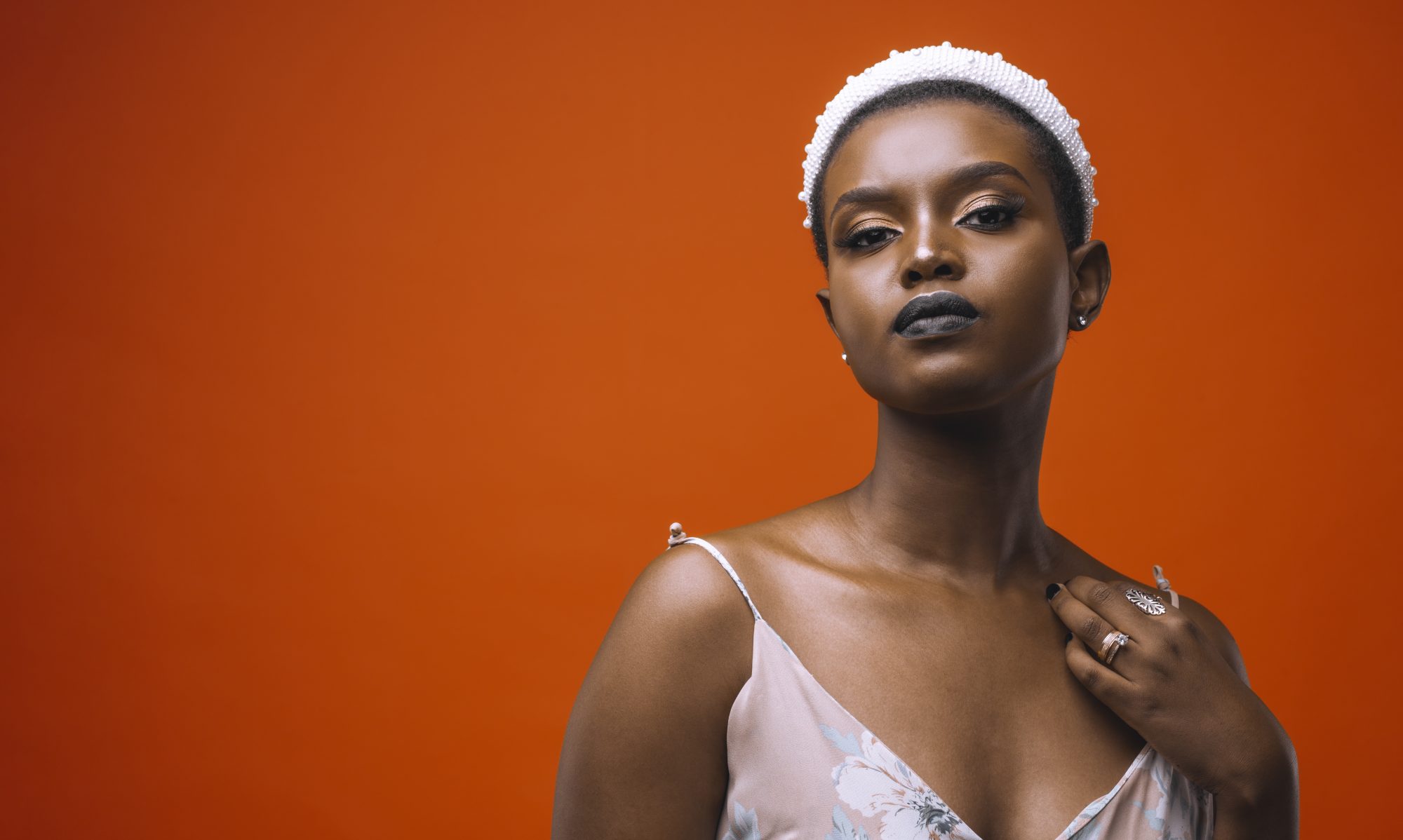
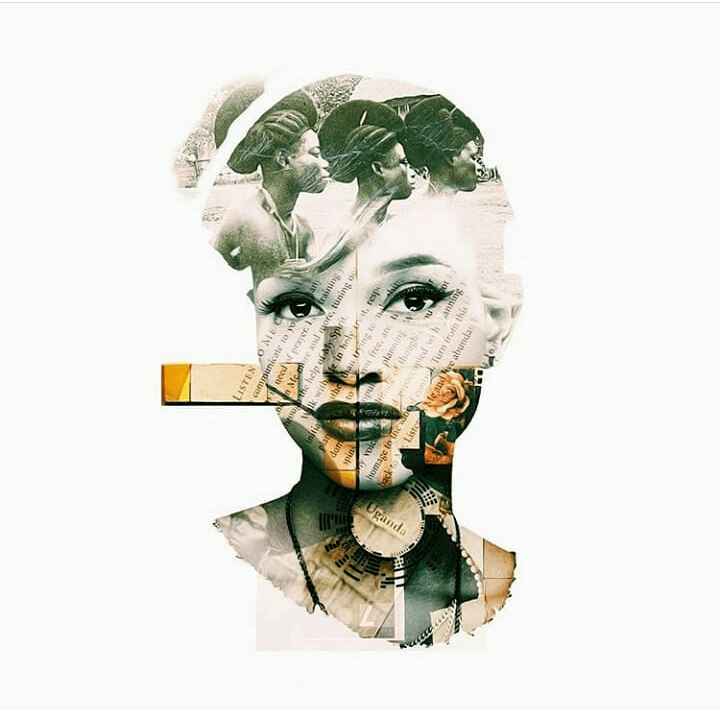
Within this process of contemplation and resultant education concerning the female and her art, I have been drawn to trying to understand the African female story and how it affects and relates to the Ugandan female artist, and eventually to myself and to others like me.
It’s literally been four months of sitting into all the possible spaces I could enunciate in my mind about the artistic matriarch. Within that time, I decided to acquaint myself with African female art, because I had never really done so, or even wanted to. It’s just that I now did, with looking for a sort of direction and usefulness with my art, even as I considered what who I am as a female, artist and Christian brought to the table for others, by firstly providing answers and an understanding about myself, for myself.
It begun here; with such a hate, but in the end with such a needed and developed acceptance too.
I knew the way everyone knows. There are facts about ourselves that we can’t and shouldn’t change because even while it is hard, it is more beneficial and therefore more mature to accept the way we are for a useful purpose. I knew had to accept myself but I also hated myself. I hated my story. I hated that it marred and overshadowed and overwhelmed who I wished to be. I could have been so much more if I wasn’t African. I also hated that I felt that way.
In this part of the process, I realized I had been facing and struggling with a fierce sort of issue. It existed deep in my subconscious repressed and subliminal. With the slight cognizance given to its existence, it erupted from the innermost and like lava melted its way through everything I had constructed in my life to do with the knowledge of myself. It was realization given birth to greater and deeper realization, beginning with suggested presupposition and appearances of prevarication. All I presupposed in some ways was true. All that was seemingly equivocal was as well, almost in entirety simultaneously truth. I didn’t understand how everything was such a truth and such a lie at the same time. I descended into confusion, and then sadness, borderline depression and despair. In the few moments I could stand on my feet on top of that, I found myself spurred into such a frustration, and then anger and then finally almost a completely blinding rage.
In the past 6months, there was a time I hated conversation that had anything to do with “me” because I was conspicuously and overtly “myself”. Subjects on race, colonialism, Africa and even sometimes cultural appropriation made me feel even more black, colonized, Ugandan and a sojourning morph in a cultural hybridity that will ensure I never settle into myself. I felt like in those conversations, because of who I was, I had to represent views associated with someone like me. I hated that talking about made it feel truer.
I wanted to deny it. I wanted to change it and with every desire to do so, was the even deeper, deeper and deeper realization that I couldn’t. The deepest realization however, was that even if I could, I wouldn’t. There had to be some relevance to being me. Changing myself would be writing myself off as useless. I owed it to the composition of myself to fight for that amalgamation I despised, like a mother that had to love the child they hated because they were the child’s mother and the child their own.
I realized I hated how I came more that I hated who I was. I further realized that a lot of who I was, seeped into and was because of how I came. I wished I had a more privileged carbon story to tell with how I appeared and then essentially, with who I was deep down inside.
I didn’t want to be Ugandan because that meant I would have the opportunities a Ugandan would typically have. It meant I was from a third world country according to the rest of the world. It meant in so many ways, as a female, there were ideological constructions I had to navigate within. I appreciated the cultural definitions of a woman, but they clashed with the artist I was too. An American, typically didn’t have this problem. She wouldn’t have to worry about her legal career because she was also an artist for the same reasons I do.
I didn’t want to be black, because if I was otherwise, it would easier to explain why Switchfoot was my favorite band each time someone alluded to that fact being incoherent with the fact that I was black. I am into electronic music, folk and alternative. There is something generally prosaic for me about trap and most of hip-hop to me and it’d honestly hard to admit to that because of my race.
Let’s not even get into my post colonial issues. I’m tired of having to feel I am an inconsistency and anomaly because of that. I want to be able to move on from how out of touch most of my culture is with itself because one day long ago, we were colonized and a western culture hegemony would shadow my generation enough for it to be what it mostly consist today.
Then one day, I realized the existence of female artists with stories that shouldn’t have made their artistic journeys only difficult, but completely impossible. Nonetheless, they decided to guide and bless with the strength of their stories, despite all that should have completely inhibited them to. Almost instantly, that disappointment and shame I carried in myself for being the way I was, was replaced with such a pride to be African.
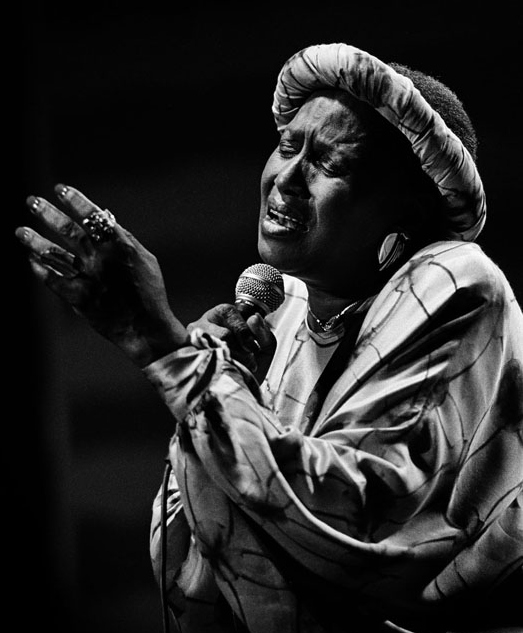
Zenzile Miriam Makeba (4 March 1932 – 9 November 2008), nicknamed Mama Africa, was all these things; a South African singer, actress, United Nations goodwill ambassador, and civil-rights activist. She used her music as an advocate against apartheid and white-minority government in South Africa.
Born in Johannesburg and forced to find employment as a child after the death of her father, life was brutal from the onset. She had a brief and allegedly abusive first marriage at the age of 17, gave birth to her only child in 1950, and survived breast cancer.
Her story as specific and as general as it was didn’t inhibit her from singing professionally in the 1950s. It didn’t inhibit her from participating in telling the story of apartheid in South Africa with films like, “Come Back, Africa” and “Sarafina.” The world heard her story and it brought her international acclaim. It gave her a position to be more for her country in ways others couldn’t. Because she couldn’t return to her own country and wouldn’t until 1990, not later even to bury her own mother, she moved to New York, and eventually Guinea. Being away from her culture and home didn’t stop her from making the music she did that in 1965 was awarded her a Grammy and had her singing about her country and its issues from where she was in collaborations with artists like Nina Simone.
Makeba was among the first African musicians to receive worldwide recognition. She brought African music to a Western audience, and popularized the world music and Afro pop genres. She also made popular several songs critical of apartheid, and became a symbol of opposition to the system, particularly after her right to return was revoked. Upon her death, former South African President Nelson Mandela said that “her music inspired a powerful sense of hope in all of us.”

Chimamanda Ngozi Adichie (born 15 September 1977) is goals for me. A Nigerian writer of novels, short stories, and nonfiction, she has written some of my favourite novels like Purple Hibiscus (2003), and Americanah (2013) as well as Half of a Yellow Sun (2006); the short story collection The Thing Around Your Neck (2009), and the essay We Should All Be Feminists (2014) that got me curious about the whole feminism thing in the first place.
Adichie had a very relatably African story. She studied medicine and pharmacy at the University of Nigeria for a year and a half editing for a University magazine but at 19, Adichie left Nigeria for the United States to study communications and political science.
There something begun for her. Growing up in Nigeria she was not used to being identified by the color of her skin. That changed when she arrived in the United States for college. As a black African in America, Adichie was suddenly confronted with what it meant to be a person of color in the United States. Race as an idea became something that she had to navigate and learn. She writes about this in her novel Americanah. It is no wonder I learn a lot from this female artist and what she has achieved for others, by achieving for herself especially in the past 6 months.
In 2003, she completed a master’s degree in creative writing at Johns Hopkins University. In 2008, she received a Master of Arts degree in African studies from Yale University. Adichie was a Hodder fellow at Princeton University during the 2005–06 academic year. In 2008 she was awarded a MacArthur Fellowship. She was also awarded a 2011–12 fellowship by the Radcliffe Institute for Advanced Study, Harvard University. In 2016 she was conferred an honorary degree – Doctor of Humane letters, by Johns Hopkins University. In 2017 she was conferred honorary degrees – Doctor of Humane letters, by Haverford College, and The University of Edinburgh.
Now she divides her time between Nigeria, where she teaches writing workshops, and the United States. Her African story in its different dimensions has spurred her onward, not impeded who she wanted to be and now is.
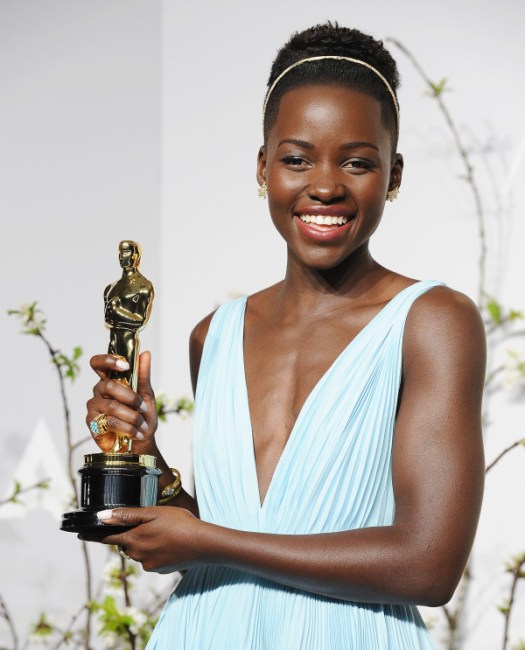
I don’t know how many people I know In Uganda and Africa that have not an ounce of faith in African film and TV. This is where Lupita begun but with what she has done fro herself, she has done in a way for others as well. She was and is the first Kenyan actress to win an actress. Shortly after that, she was nominated for a Tony with her role in the Broadway production “Eclipsed.” Now she is the Nakia we are all obsessed with in Marvel’s Black Panther.
Yes.
These females have achieved with their art. Oscars, Grammys and Master and Doctorates. That’s not the emphasis I’m making though. I’m not just saying that if you look past the impossibilities of your story, you win a Grammy and Oscar. I have to remind myself of that too.
I feel what I learn from them is that because they were true to who they felt they were as artists, and because the continued in directions they felt called to for their art, this is what they achieve for others like me, by achieving for themselves. This is what they achieve for South Africa, Nigeria and Kenya and Africa. We see it more pronouncedly because it is on platform as international as this. There are artists, who are doing the same in Uganda and the world with their art that I wish I knew about. They wont win Grammys and Oscars, but they are just the same; artistic Matriarchs of our Africa.
I celebrate them immensely.
I celebrate the acceptance and pride they have in themselves, despite their backgrounds, African female stories and struggles they have typically had just because they are human.
I am shamed by their successes, and gladly so.
 augandanartist.com