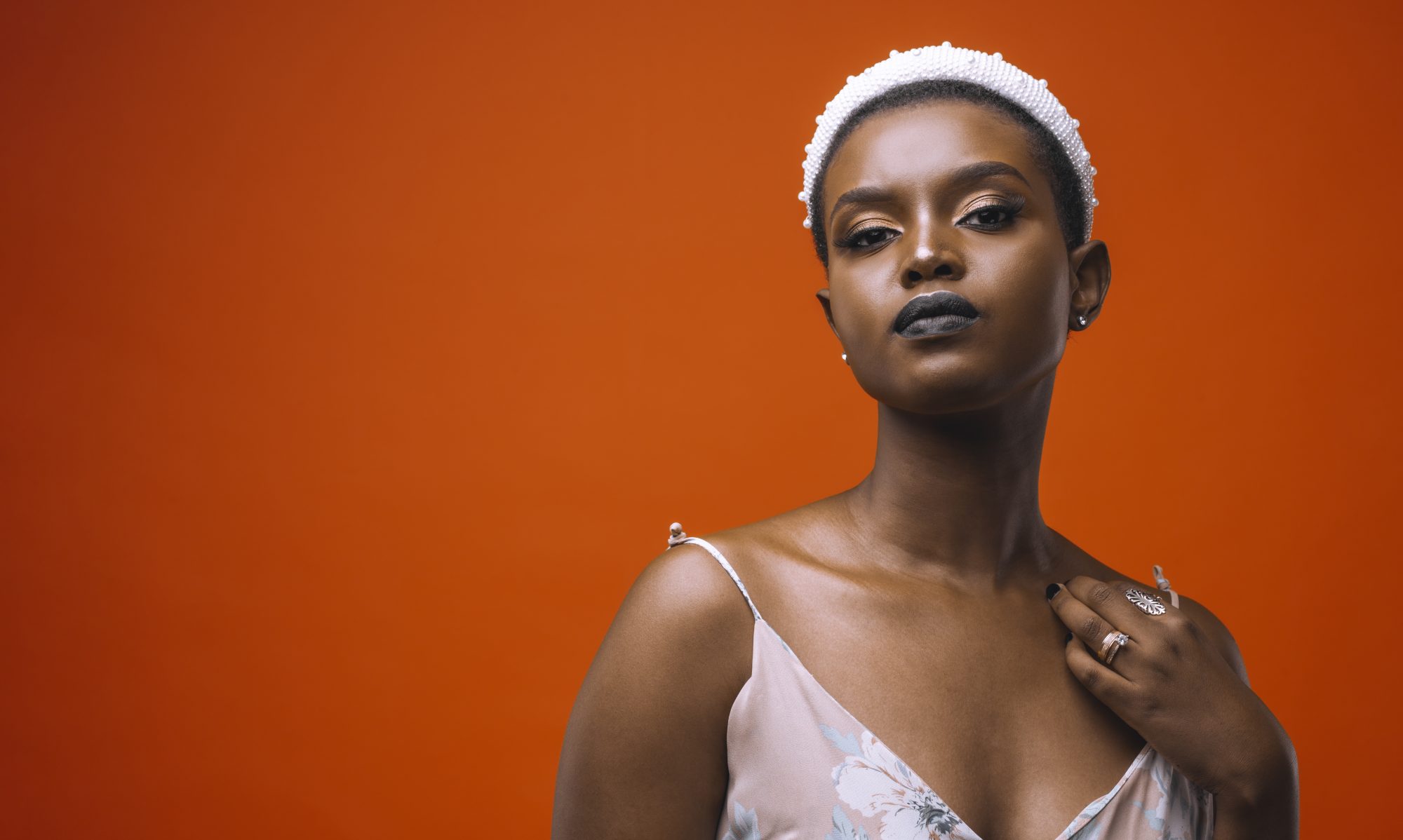
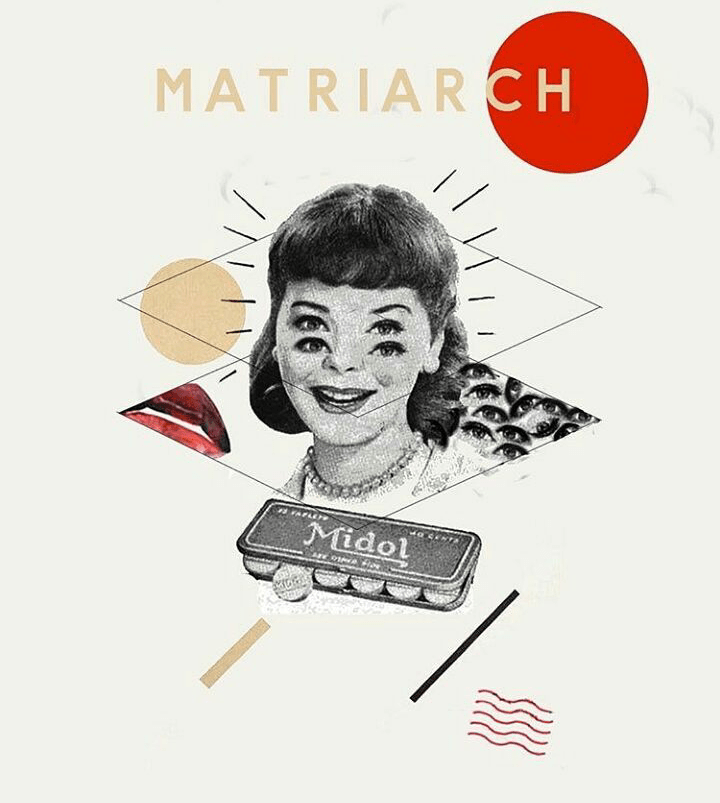
The emphasis for the next two months under aUgandanArtist is the Matriarch.
In December last year, I decided that the next three months of this year would be the allotted time to delve, and delve deeply into the oceans of my speculation concerning the artistic matriarch.
It needed to be deep enough that I’d have something real and true to say when I came back to the surface. In so many ways, that dive into a simultaneously familiar and unfamiliar depth has me processing more than understanding entirely, albeit both activities being vicariously resultant of each other. The more I understand, the more I process. The more I process, the more I understand. It felt like, and continues to feel like a journey more personally experienced than exigently espoused on a blog like this.
It has therefore taken me a little more time than anticipated to wrap my head enough around this, and credibly articulate the essence of what my mind understands, and what my heart envisions, in a way similar to which the drenching waves and waters of inquiry wrapped around me in their fluidity. In fact, let me just cut the crud and tell you that I might not be remotely capable of achieving this object, but I guess we can come to some form of forced concession, which is me making this entry anyway.
Maybe it will make some sense. Maybe it won’t.
Nonetheless, I have known most of my brief life that there is something about art and the man, but something completely else when it came to art and the woman; not just because I am both, but also because I have seen a thing that cannot be unseen in my mind- other women in the arts.
Even as an 8 year old reading Enid Blyton for example, I was more intrigued about the person who wrote the stories, because the kinds of stories she wrote made me more curious about her. It made some sort of sense, her life and her stories; because in both I saw her– almost as a real life illustration of parallax difference- with mirrors reflecting off each side to reveal the coherency of what becomes the singular story of Enid Blyton herself, in a messy rebellion and defiance against the sometimes confining cage of norm and rite in her day.
She was messed up. In her own way. Just like we are all messed up. In our own ways. We see that mess in ourselves and in others. We are born into messes of institution because they are perpetuated and structured by messed up people. We are fighting to be better human beings and to make this world a better place because we are more acutely cognizant to that mess, as opposed to a natural disposition oblivious of it.
I know that to some people, that “universalist” and “absolute” notion that “we are all messed up” tends to a “conservatism” disjoined from our postmodern minds and post modern era, but tell me; what you can look at in this world, and not see as messed up, or as a reaction to that mess, either as hope or as despair? Show me that, then we can talk. But for now, you are messed up, and maybe “less” messed up than others. For now, I am messed up, and maybe “more” messed up than others. But it doesn’t end at that though. We’ve been through enough to realize that. At least we have realized that to some extent, one I hope will continue to grow for the better. So the world, finally awake and aware of this “mess” has reacted both in hope and in despair by making laws, establishing the UN, religion, science, community, among others that like the neutral tool they are, fuel or put out the effects of that fiery mess, in and around us.
Art is a reaction as well, with a differently neutral quintessence when it comes to the woman and mess. I won’t spend too much time dancing around the studious and complex ambits of feminist critical theory because that’s not my emphasis here and right now, but I’ll move a bit and enough to confidently say that the woman is different from the man. It’s actually kind of complicated when you think about it; that something you’d presume seemingly obvious, isn’t that simple to state. Therefore for clarity’s sake, here’s what I mean in this sense by that statement.
My intended meaning can be surmised to mean and express the knowledge we all have. That the woman’s history and story over the centuries, has been a long and brutal one; not just because of the man but because of who she is inside and tends to continue to be- acutely emotionally aware. We all know that, but see, I’m thinking that fact affects a lot, including art and exhibited in the art made by women.
For such a long time and even today, that fact among many, has been ascribed as a weakness that made the woman only good enough for things like taking care of the home and the children, which is an amazing thing, don’t get me wrong. It takes a strength of an unimaginable kind to do those things. Just think about it, how easy is it to raise children again? Yeah, that’s right. It’s not. But I’m sure the problem is that, women have been confined to those roles and those roles alone. It was singular construct of such a plural and subjective issue. That’s just part of the struggle over the centuries when it comes to the woman’s story across cultures.
However, the point is that with all women went through, whether a blessing or struggle, the great emotional energies that were either a Tsunami of direction and determination, or a nuclear implosion of surging fury and brokenness, showed what was already there- strength. This is the same undeniable, irrevocable truth and beauty I see in the art of the woman. She is the artistic matriarch. This strength makes the women and her art so beautiful.
It was who we already were- strong; strong enough to guide, protect, nurture, and care to our husbands and children, and as well understand an incomprehensible suffering so deep. Who we are was all that was needed and adequate, to form in us a perspective and lens to see and experience the world so differently from the way a man would see the world, seeping even into the arts.
See, it is important to understand that the word Matriarch means. Yes. It is; “A woman who is the head of a family or tribe.” Its etymology however, is rather interesting. It comes from the latin words mater, which means mother. I therefore apply the diction in this instance, “Matriarch” , with interest in its meaning and symbolism, and how all that amalgamates into the concept of the artistic matriarch. I’m talking about the art and how it looks as created, and presented by a woman. I’m also talking about one of the reasons I think that is. Let’s step into something else for a bit though.
Once upon a time, patriarchy was justified for so many reasons, some even rational. There were the exigencies of protection and provision, that allowed for the eventual and hapless articulations of such a system within culture and social stratification, that led to a lot of suffering for women. It is no wonder that the reception and understanding of the word “patriarchy” today, receives the reaction it does. Supporting that understanding is its etymology, that in Greek comes from the words patria referring to family, and arkhes that means ruling. Ruling family. You can easily get the negative gists of that.
But what I am trying to and may be miserably failing to communicate, is the meaning, nature and symbolism of matriarchy, against a backdrop as intense and severe as patriarchy as in the context of history and its present day manifestations; a contrast I hope enunciates the character of matriarchy, and thus an understanding of the artistic matriarch.
What I’m trying to scream on the rooftops with the word and meaning of the word matriarch, is that the natures of matriarchy have their root in the intentions of a mother. The intentions a mother would have for her children and family, are intentions generally deemed to be well meant and to do with guiding, nurturing and protecting her own. The nature of the matriarch, is also rooted in the deep understanding of the strength of a woman to struggle and persevere in such a difficult way, for the sake of those she loves, including herself. I’m not saying the man doesn’t care about his own. Im just saying that with the matriarch, she understands and responds to the mess in herself and around her, differently from the man and that’s the thing.
What I’m saying is that the differences between men and women as rooted in their patterned dispositions are even articulated in these social systems, which is why I contrast them. The contrast emphasizes differences, and differences can be used to emphasize role, function and over archingly choice to implement those roles, functions and abilities..
I’m sure patriarchy had some good things that came from it, and could have continued to come from it. Protection and provision are noble and necessary aspirations. Men protected and provided for their families. That was their kind of strength. But like anything and everything under the sun that man is involved in, there is the choice to swing it positively, or negatively. An analysis on history can answer that more definitively.
Therefore, I am contending as well that matriarchy too has negative ways it can be swung and you can see that in female art too. You can choose your own examples of that. But today, I am celebrating the good I see in the marriage of the matriarch and her involvement in art.
I am celebrating the female leader, leading and guiding with her art, not tearing down by it, despite the gifts given her to the potential of matriarchy. I am celebrating the matriarchs that chose to build with their strength, and not put down with it. To me, that is the true artistic matriarch- the one who builds with her strength, with her art.
That’s what I see that moves me to tears sometimes with such understanding with women in art. When I listen to someone like Nina Simone sing,
“Why you wanna fly Blackbird
You ain’t ever gonna fly
Why you wanna fly Blackbird
You ain’t ever gonna fly
No place big enough for holding
All the tears you’re gonna cry
Cause your mama’s name was lonely
And your daddy’s name was pain
And he called you little sorrow
Cus you’ll never love again
You ain’t go no one to hold you
You ain’t got no one to care
If you’d only understand dear
Nobody wants you anywhere.”
It becomes something else entirely! It is her story and the pain from it, the strength and endurance to move forward and strive despite it, shouting through the dark clouds of an oppressive history, like sun rays that blinded you and sounded louder than the cracking of a mimicry thunder. In these words she tells the story of her dreams and her endured suffering. She sung and played to get through it all and even then, it was like her times said and decreed she wasn’t allowed even that- to get through it all. That’s what she sung. She sung to build herself and community by calling attention to the suffering of the blackbird. She is remembered for that kind of strength. Her life and her art were a story coherently articulated through each note and word she sung. Thats what I hear.
When Maya Angelou writes and says,
“You may write me down in history
With your bitter, twisted lies,
You may tread me in the very dirt
But still, like dust, I’ll rise.
Out of the huts of history’s shame
I rise
Up from a past that’s rooted in pain
I rise
I’m a black ocean, leaping and wide,
Welling and swelling I bear in the tide.
Leaving behind nights of terror and fear
I rise
Into a daybreak that’s wondrously clear
I rise
Bringing the gifts that my ancestors gave,
I am the dream and the hope of the slave.
I rise
I rise
I rise.”
It’s exactly this; a different way of existing and being- through her art, for you to see, for you to respond to in change, in remedy of all the mess. She recites her life and her time and her hope- her strength. Maybe those who feel more suffer more? Maybe those who feel more, live more? Maybe those who feel more, hope more? Maybe you can’t even begin to describe or imagine how much she felt therefore? How can I speculate this? Look at those words and tell me you don’t wonder the same! Maybe those who feel more and rather differently, are women. Maybe. There’s so much about us that justifies even much much more than a maybe.
Chimamanda Ngozi Adichie is one of those female artists closer to home for me. We live almost in the same time and circumstances. When she says,
“Culture does not make people. People make culture. If it is true that the full humanity of women is not our culture, then we can and must make it our culture.”
I understand a lot, but mostly this. She lives and exists in a culture that is swung by humans in a negative direction for women with the cages they enforce by that culture.
“We teach girls to shrink themselves, to make themselves smaller. We say to girls, you can have ambition, but not too much. You should aim to be successful, but not too successful. Otherwise, you would threaten the man. Because I am female, I am expected to aspire to marriage. I am expected to make my life choices always keeping in mind that marriage is the most important. Now marriage can be a source of joy and love and mutual support but why do we teach girls to aspire to marriage and we don’t teach boys the same? We raise girls to see each other as competitors not for jobs or accomplishments, which I think can be a good thing, but for the attention of men.”
That what she called out, with her art for herself and for others. In just one speech she was telling other women this- she was saying, sometimes it is important to step out of the gender constructs and notions to truly understand yourself. When you understand yourself you can be who you were made to be, for others. When you step out, you understand that who you are is useful and good and beautiful. It’s not crazy that many females and even female artists don’t understand or see this because it’s indeed hard to break free of the thing you don’t know is binding you. Your decision to break free from that thing cannot be because I pointed to it and said something to the effect that you should free yourself. It’s not that simple. Some of what I share are the chains among many, that inhibit me and impede me on a daily for leaning into the knowledge of who I am. But this is me calling them out. Chimamanda’ s chains in some ways aren’t mine, but I identify and understand them because I have my own. That’s what I remember and understand when I read her books.
In case you missed it, this post isn’t just another feminist endeavor because when you think about it, for so many reason and in so many ways, we should all be feminists.
I’m just saying that there is something female artists bring to the table that’s different, only because women are different. I see how in this way it affects art and what it gives and shares with those that perceive it. It makes it all the more precious and serious. It makes it strong.
In most female art, I see the spirit and nature and concerns of a Matriarch and I celebrate that, and what it does in a peculiar and specific response to the mess that just keeps on getting messier. They are the matriarchs of my land and my home and country and world, and in their art I see their strength.
I see their femininity. That’s what I want to celebrate this month and next.
I see what makes them a woman through their art, but I also see what makes the art what it is- and it is a woman.
It is beautiful.
I really think it’s beautiful.
“I’m the matriarch of your land, if you need to take my hand.”
SIA
 augandanartist.com
Awesome stuff there
LikeLike